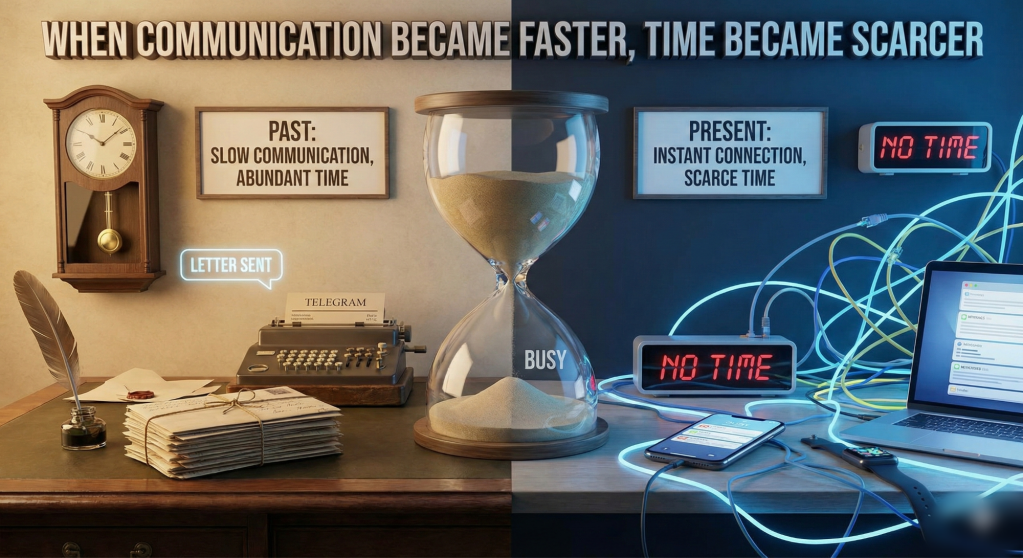
There was a time when communication moved slowly. Messages travelled through telegrams, handwritten letters, or word of mouth. News of a wedding, a family gathering, or even an unfortunate incident would take days to reach. Travel options were limited—flights were rare, expensive, and beyond the reach of most people. Roads were fewer, and journeys took effort, planning, and patience.
Yet, despite these limitations, people showed up.
They travelled long distances to attend marriages, to stand by family during grief, or to be part of important moments. Time was adjusted, priorities were reshuffled, and physical presence carried immense value. Reaching someone was difficult, but once the message arrived, it mattered deeply.
Fast forward to today.
We live in an age of smartphones, instant messaging, video calls, and network-covered regions. Information travels in seconds. Flights are frequent, booking is easy, and connectivity is no longer a challenge. On paper, reaching people should be effortless.
Ironically, it is not.
Today, people often cite “lack of time” as the biggest constraint. Work schedules, deadlines, meetings, and personal commitments take precedence. Invitations are acknowledged instantly, condolences are sent via messages, and participation is often reduced to a call or a text. Physical presence has quietly taken a back seat.
The paradox is striking.
Earlier, communication was slow but intent was strong. Today, communication is instant, but availability is limited. Technology removed physical barriers, yet time—once abundant in spirit—has become the scarcest resource.
This shift reveals an important truth: progress does not only solve problems; it redistributes them. As convenience increases, expectations rise. As speed improves, patience declines. As connectivity expands, personal presence becomes optional.
The world has not become better or worse—it has simply found its balance. What we once lacked in technology, we compensated with time and commitment. What we have gained in speed, we have paid for with attention and availability. In the end, everything balances out—only the currency changes.

 My100Dreams.Com
Leave a comment